how I fixed my broken electric oven
October 2026
it just stopped working
I used this little oven almost every day. Then one day, out of nowhere, while I was cooking dinner, it stopped working. So I said to myself: let's fix it!
I have no experience with fixing electrical stuff. I know the basics of electricity, because I like watching videos that explain it, but nothing more.
first suspect: the fuse
I immediately thought it could be a fuse. Not sure why; I'd just always heard about fuses. But now I know what a fuse is: it protects your circuit from too much current. Put even more simply: it's rated for a certain amount of current, and if the current exceeds that, it simply breaks, saving your circuit. Genius!!
So now I needed a multimeter, and that was the first thing I looked for.
opening it up
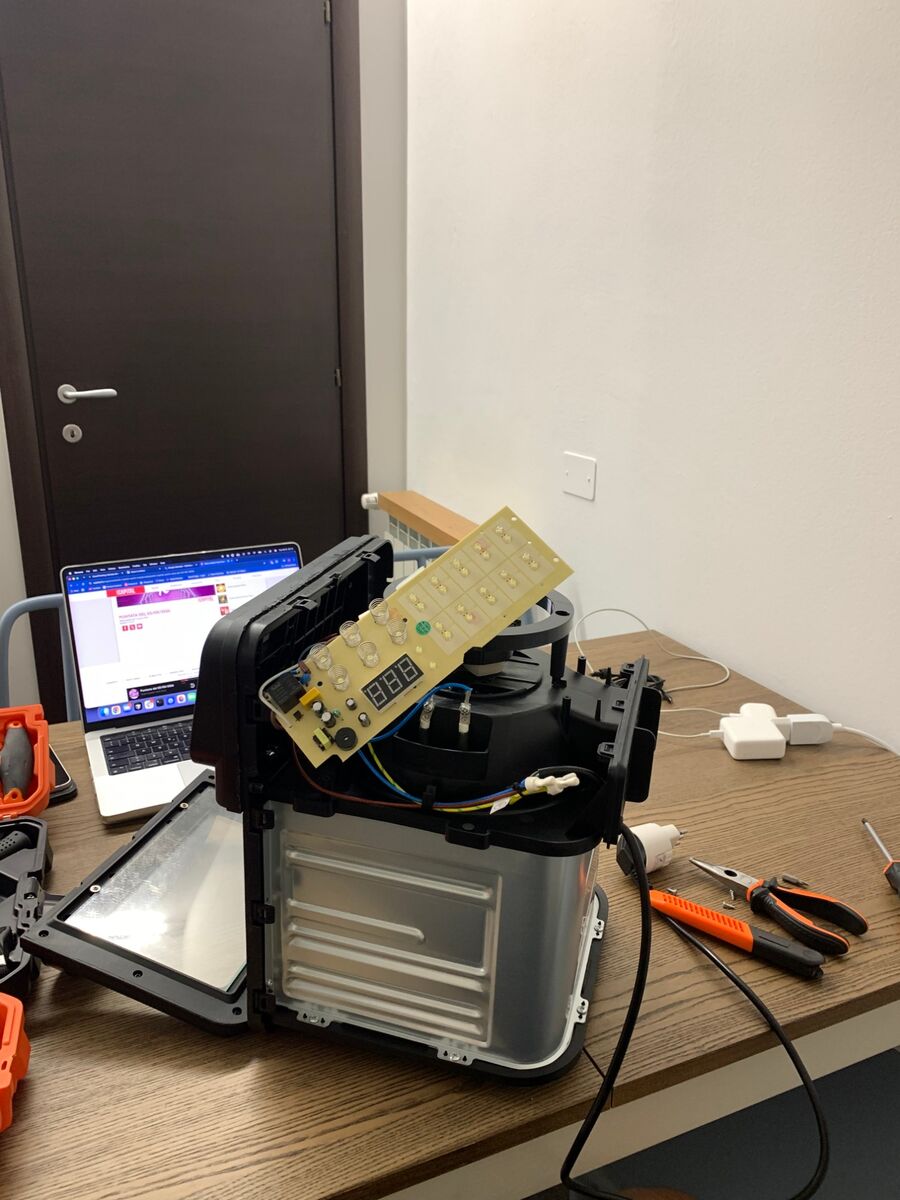
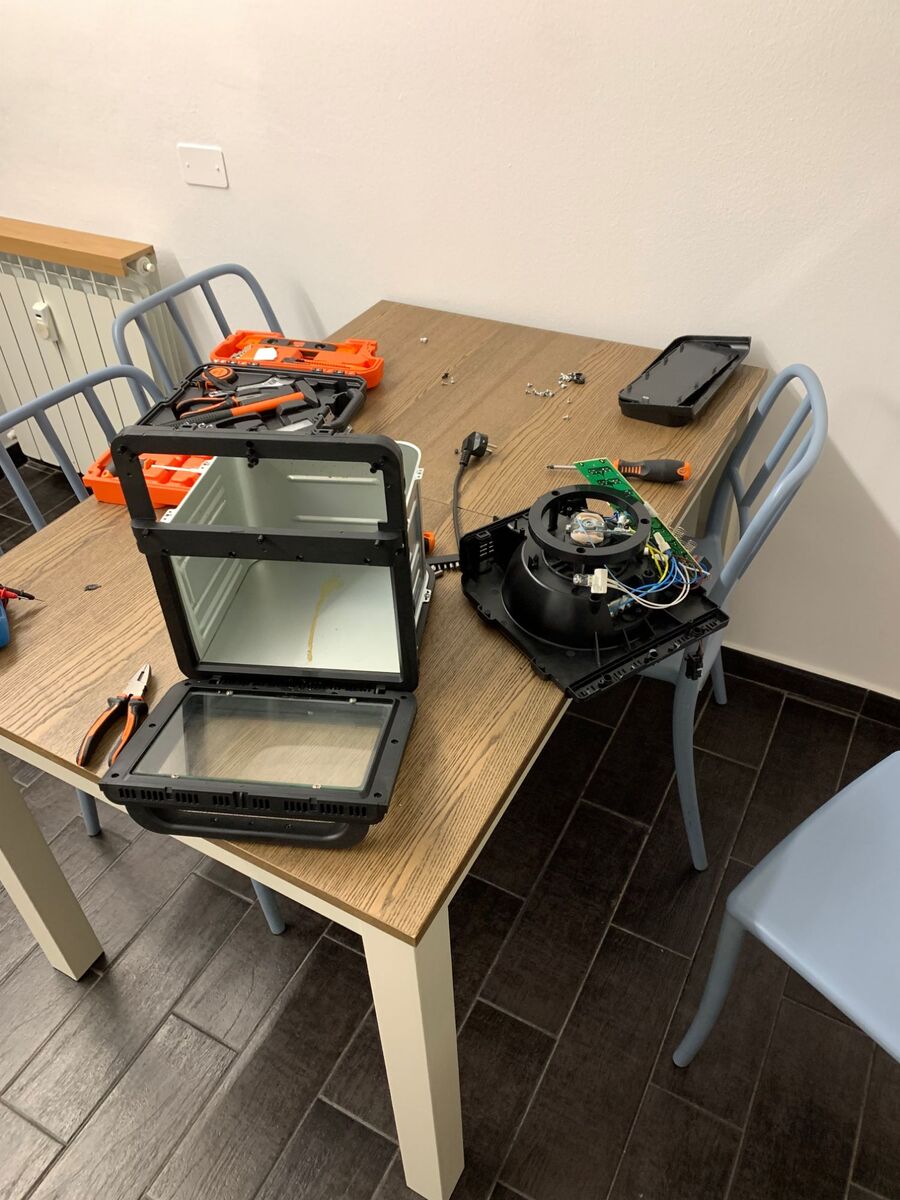
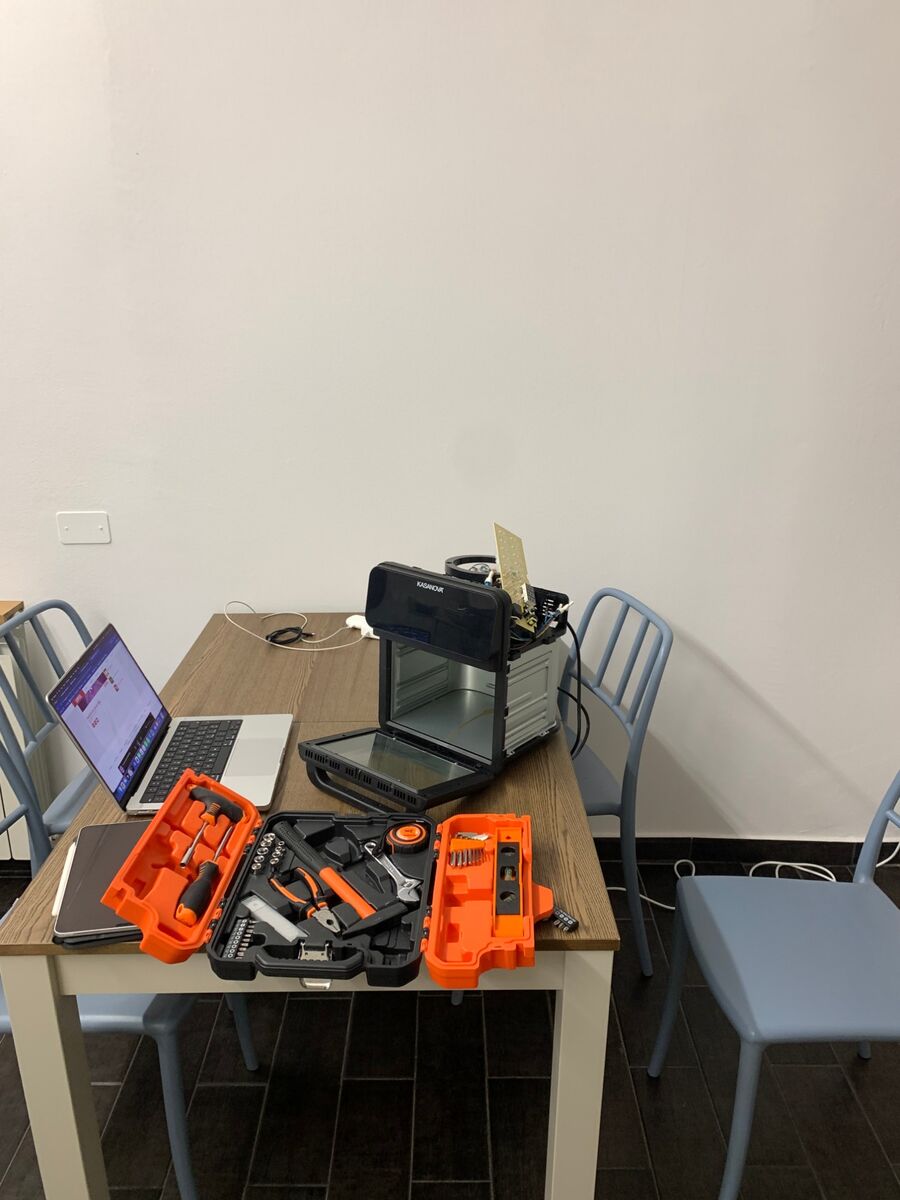
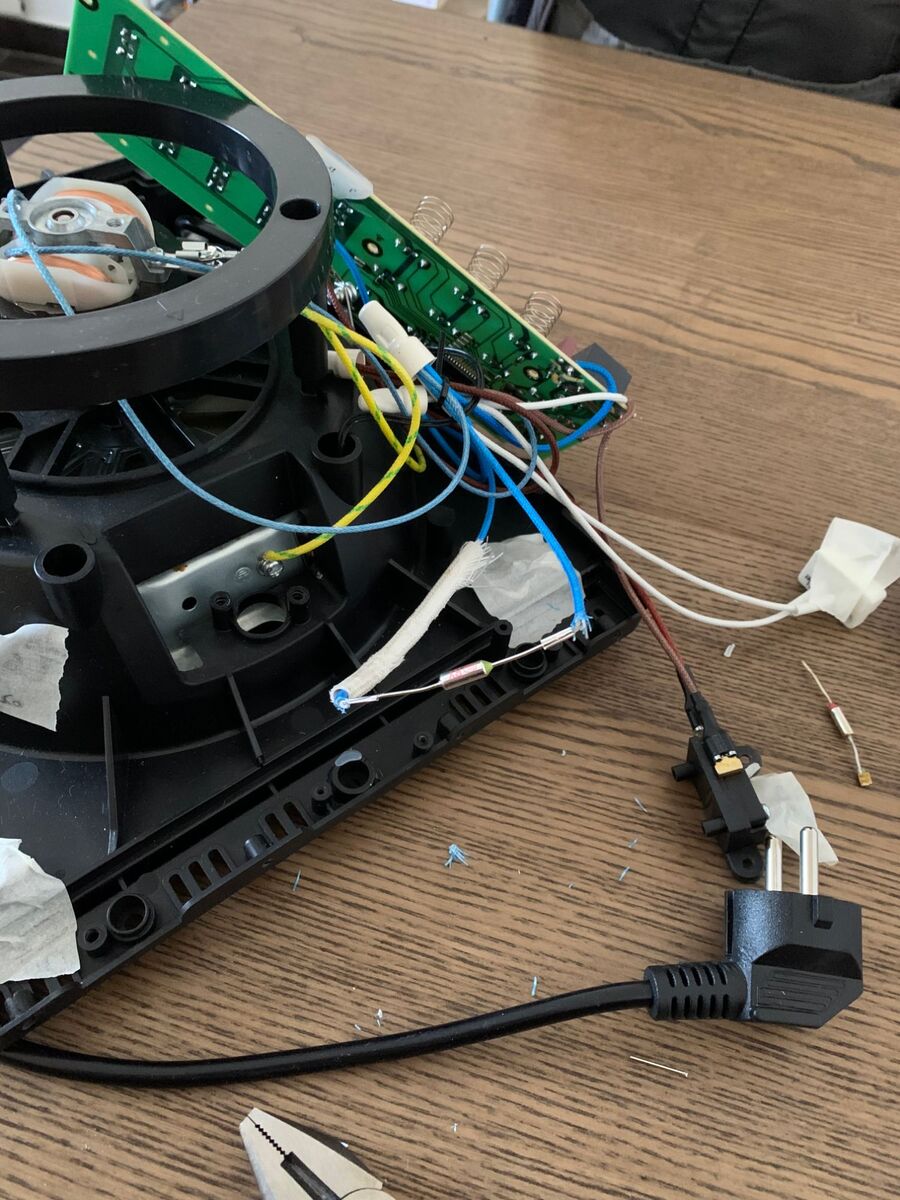
Then I started to disassemble the oven, removing the outer casing to get to the circuitry. It was actually really hard. I'm pretty sure they made it hard to disassemble on purpose; otherwise, guys, you need to review your structural design ahahah!!
the real culprit: the thermal fuse
Once I reached the heart of the oven, I checked whether current was flowing through every section, from the plug to the circuit. First, I checked the electrical fuse, and it turned out to be fine. Okay, so my first suspect wasn't the culprit. What now?
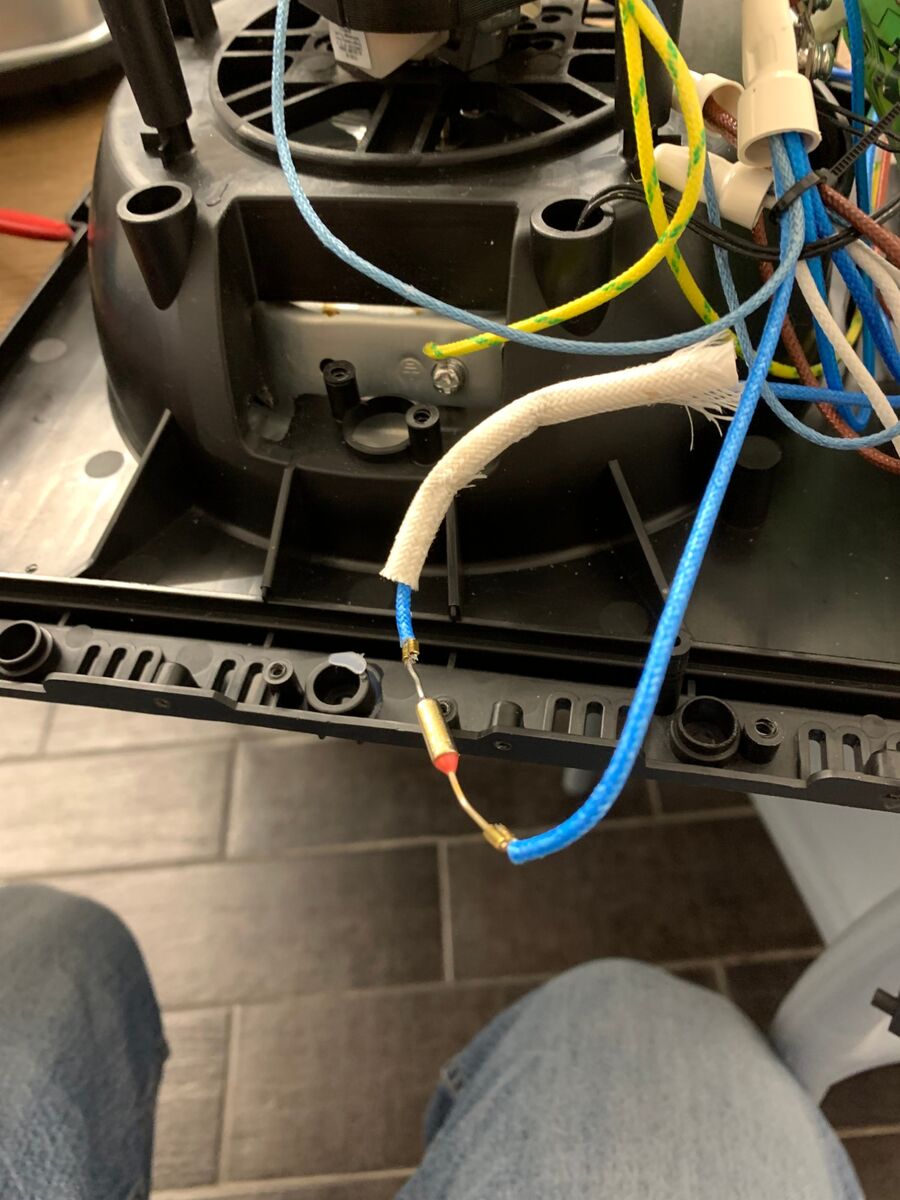
After some research, I discovered that most electric ovens also have a second fuse: the thermal fuse! What the heck is a thermal fuse? It works the same way as the electrical fuse, but it breaks because of the temperature, not the current. Genius again!!
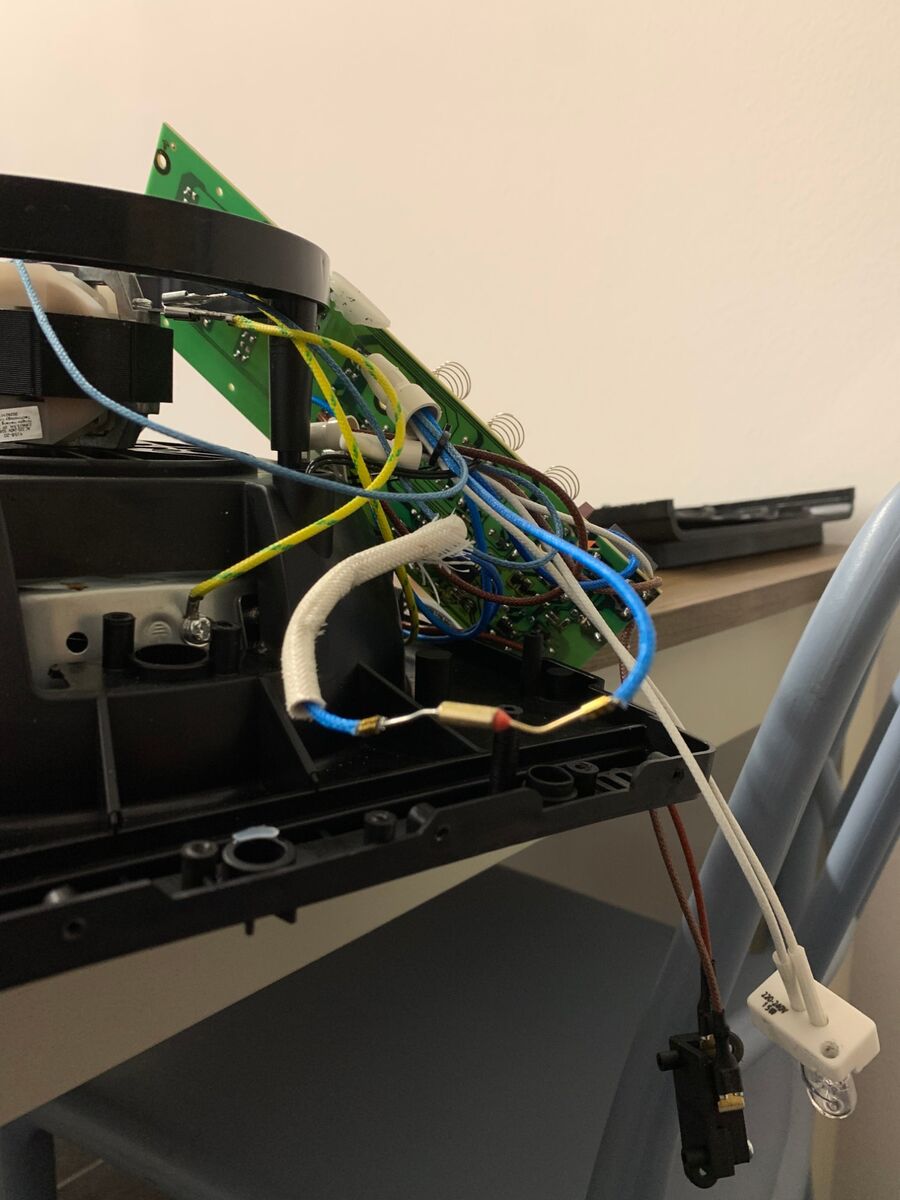
I had no idea what a thermal fuse looked like, so I followed the wires until I found it. Spotted it!!
testing it
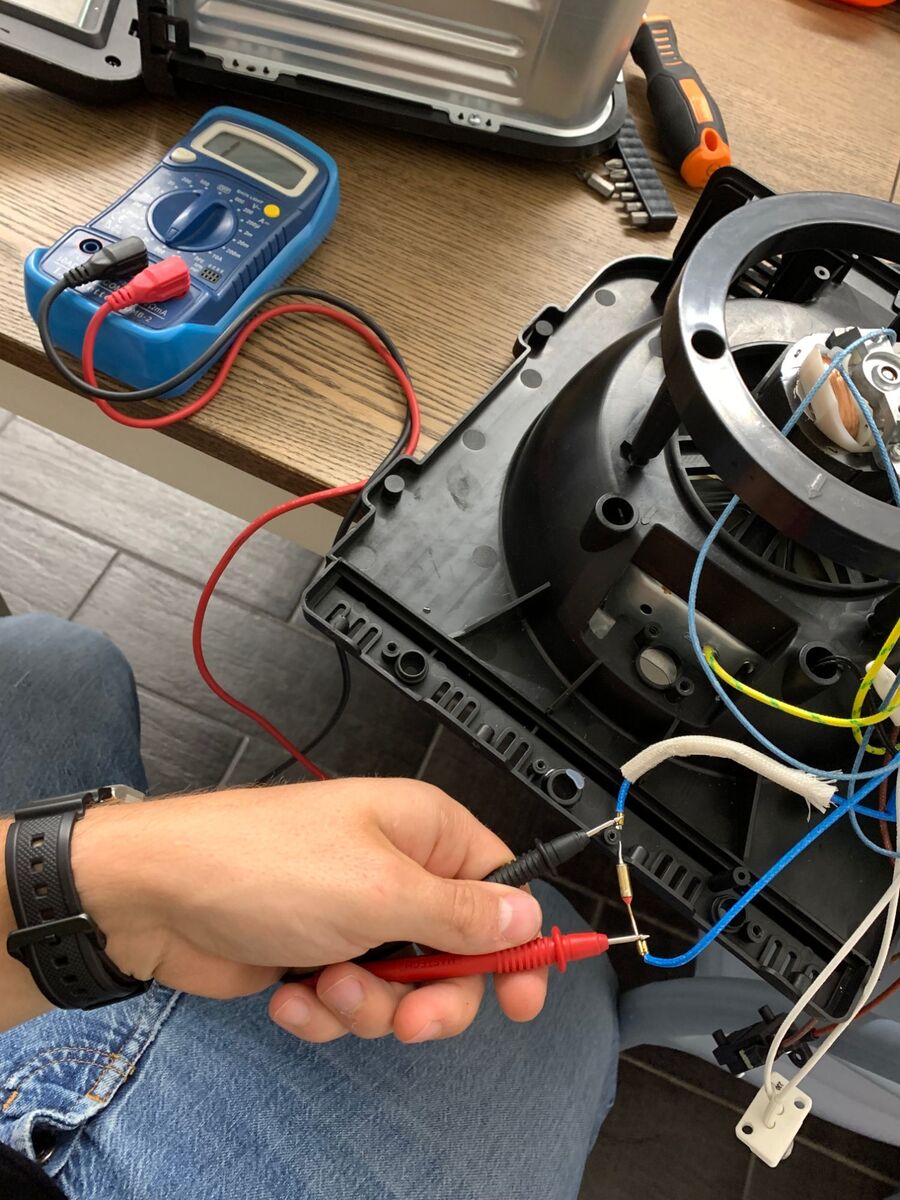
So I checked it with my multimeter, and it didn't beep: it was the culprit!!
finding a replacement
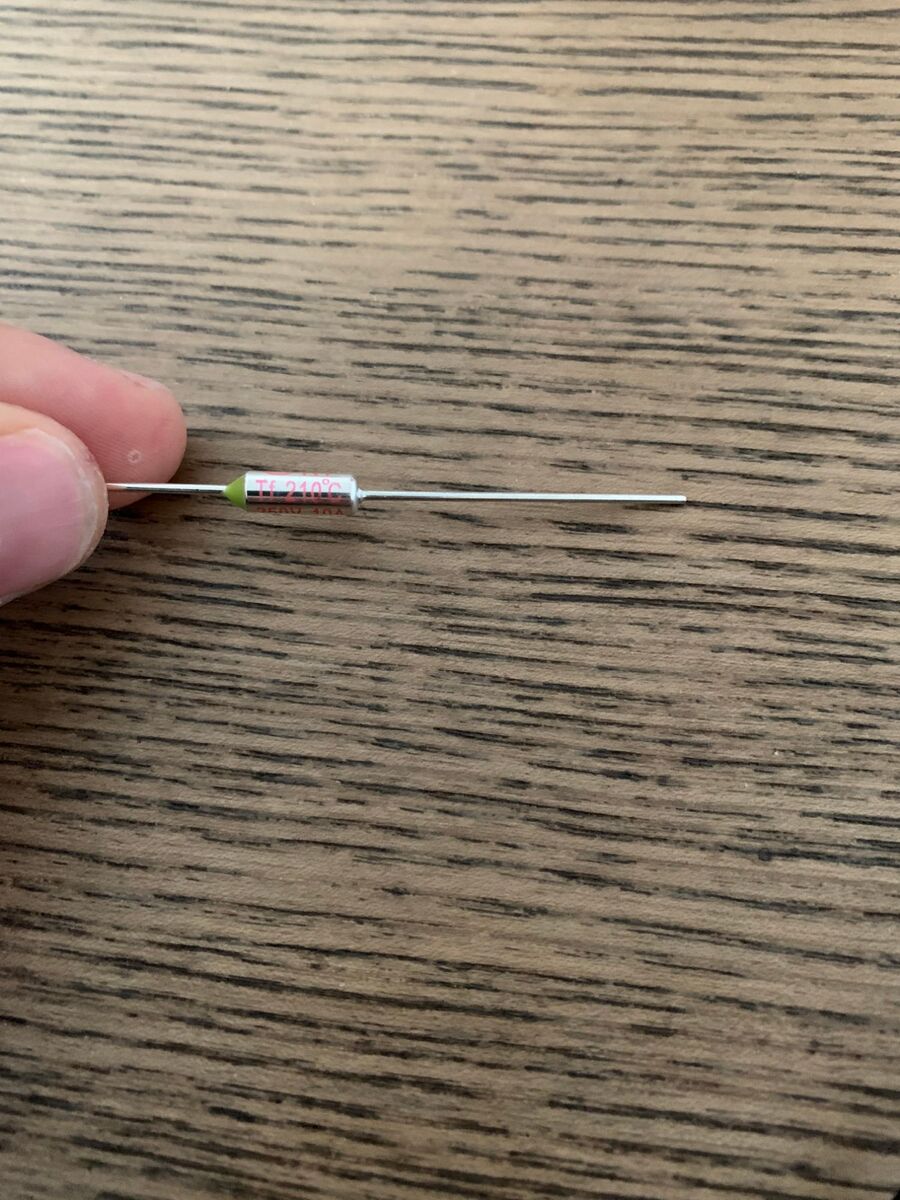
Now that I knew what was broken, I went online and looked for a new one. I found out that it was not that easy to find an exact match at a reasonable price, so I went for one with the same 250 V / 10 A rating, but with a higher max temperature: instead of 192 °C I picked 210 °C.
The difference is small, and hopefully I won't run into the same issue again, since it will only break at a higher temperature.
To be honest though: the thermal fuse is the oven's last line of defence against overheating, so a higher cut-off temperature makes it a bit less safe. And a thermal fuse usually blows because something made the oven overheat, like a stuck thermostat or a weak fan. So if you try this at home, check those too before swapping the fuse. Wish me luck!!
installing the new fuse
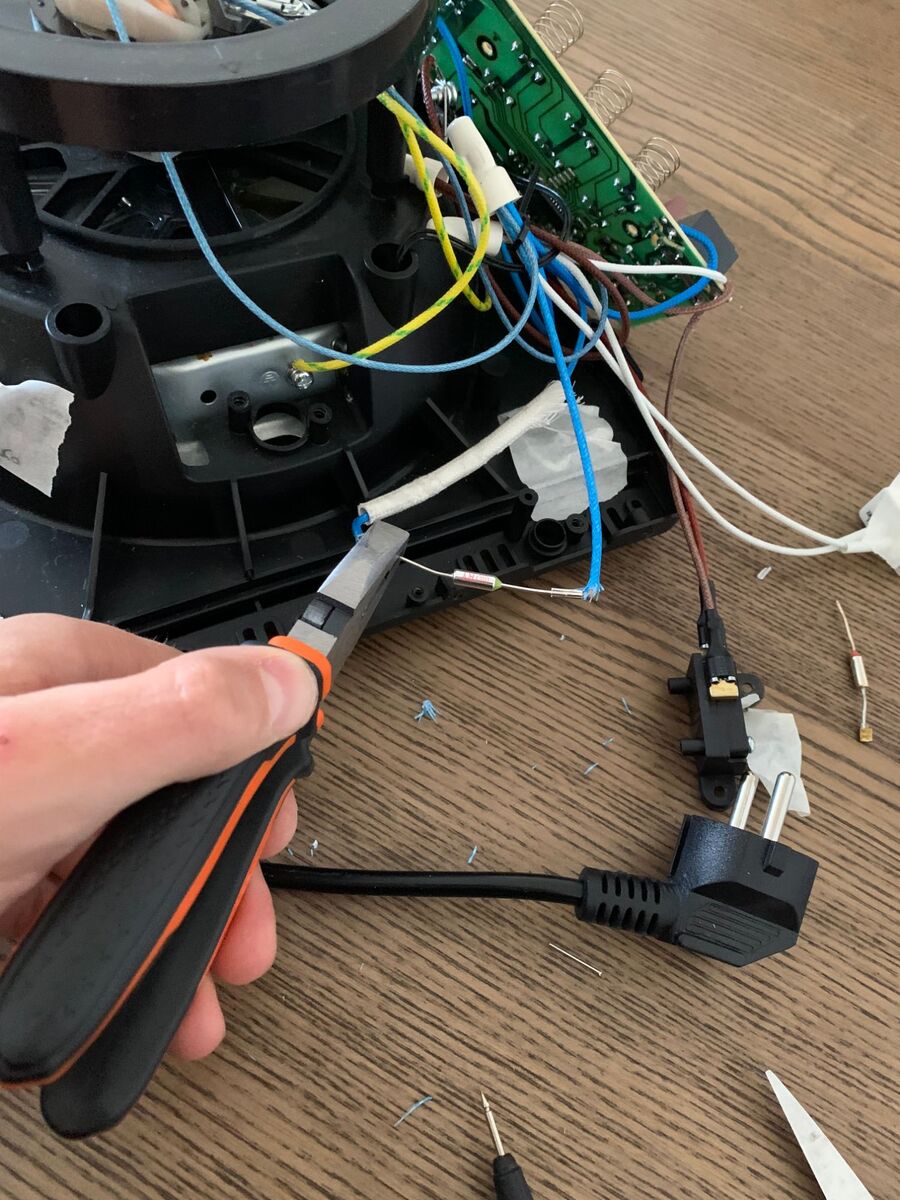
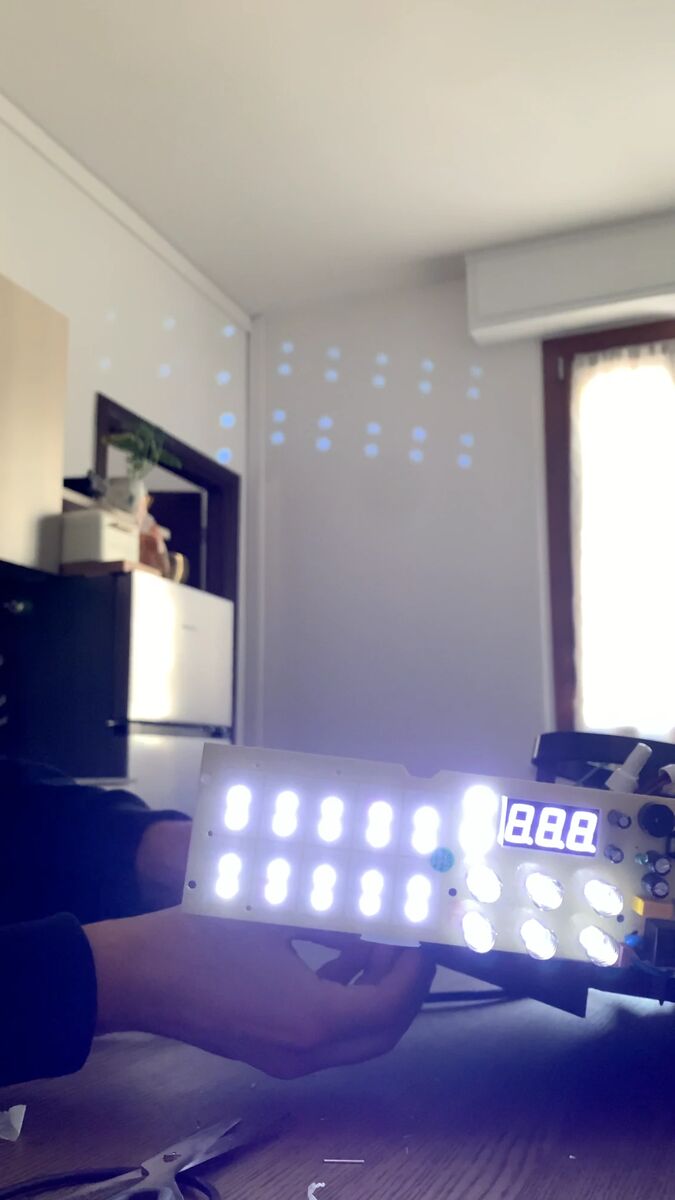
Then I installed the new fuse, tested it, and it worked!!
After that, it was time to put the oven back together: the easiest part.
conclusion
Fixing something hardware-related was so much fun, and challenging too, and it gave me a lot of satisfaction. I find hardware in general fascinating. I love it!
what I learned (or refreshed my memory on)
How to use a multimeter: in continuity mode it beeps when current can flow between the two probes. A broken fuse stays silent.
Fuse: a weak link that breaks the circuit when too much current flows, sacrificing itself to protect everything else.
Thermal fuse: like a fuse, but it breaks when it gets too hot instead of when too much current flows.
Current: the flow of electric charge through a conductor, like a wire.
Volt (V): the unit of voltage, the electrical "pressure" that pushes current through a circuit.
Ampere (A): the unit of current, how much electric charge passes a point every second.